

Guides
The Turnstile Access Control Integration Guide (2026)
How turnstiles and speed gates wire into HID, LenelS2, Genetec, and Honeywell: protocols, reader packages, REX, fire-alarm release, and anti-passback.

Gatestile Engineering Team
Engineering & Specifications, Gatestile
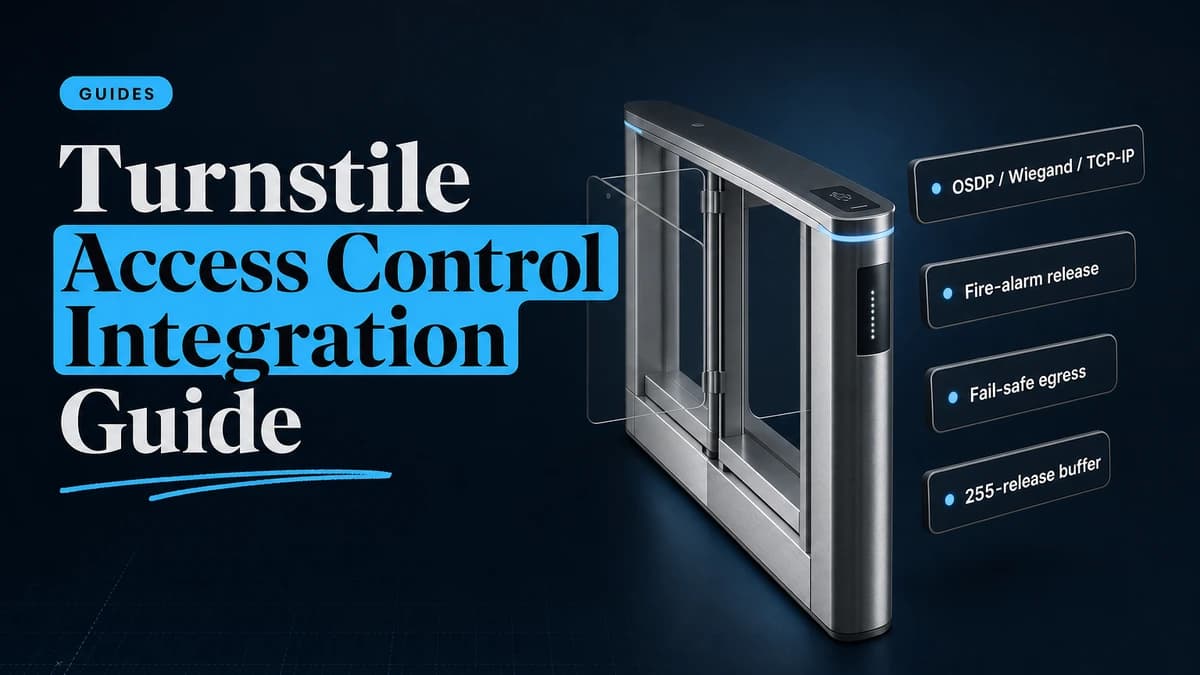
Integration support is a buying criterion, not an afterthought. The turnstile manufacturer selection guide covers how to vet it, and the data center turnstiles guide shows a high-security integration in practice.
The mental model: the lane is an actuator
Every turnstile integration reduces to the same loop. A credential is presented at the reader. The reader passes it to your access control panel. The panel decides authorized or not. If authorized, the panel sends a release signal to the lane controller, the barrier opens, and the lane reports the passage back. The turnstile never makes the access decision; your head-end does. That single fact is what makes integration straightforward: anything that can grant a door can grant a lane.
The three wire protocols
| Protocol | Use it when | Notes |
|---|---|---|
| OSDP (OSDPv2) | Any new install | Encrypted, bidirectional, supervised. SIA-recommended modern standard. |
| Wiegand 26-bit | Matching legacy panels only | Unencrypted; tappable and replayable. Being phased out. |
| TCP/IP | Cloud-managed ACS (Genea, Verkada, Avigilon Alta) | Network-attached lane controller; needs a switch port and VLAN. |
Head-end compatibility
Our lanes are tested against the major US access control head-ends. The integration path is OSDP or Wiegand at the reader, with TCP/IP available where the platform is network- or cloud-managed. On protocol choice, SIA's OSDP standard is the reference specification.
| Head-end | Path |
|---|---|
| Lenel OnGuard / S2 | Native: OSDP / Wiegand |
| Genetec Security Center | Native: OSDP / Wiegand / TCP/IP |
| Honeywell Pro-Watch | Native: OSDP / Wiegand |
| Software House C·CURE | Native: OSDP / Wiegand |
| Verkada / Avigilon Alta / Genea | TCP/IP or BLE reader + Wiegand backplane |
The pattern: on the established panel platforms, integration is a wiring-and-config exercise. On cloud platforms, the lane attaches over the network or uses the platform's own reader on a standard backplane. If you have a head-end in mind, name it on your quote and we confirm the exact path before you specify.
The reader is a separate decision
A common specifier mistake is treating the reader and the turnstile as one choice. They aren't. The lane exposes a reader plate and a backplane; what you mount on it is independent:
- Card / fob: HID iCLASS Seos, MIFARE DESFire
- Mobile credential: HID Origo, Apple Wallet, Google Wallet (BLE/NFC)
- Biometric: face, fingerprint, palm, or iris (Suprema, IDEMIA); factory integration adds ~2–3 weeks
- QR / barcode: for visitor passes, transit, and events (top- or angle-mount scanner)
Choose the credential strategy for your security and UX goals, then mount the matching reader. The turnstile class does not constrain it.
Visitor management and REX
Visitor platforms (HID Origo, Envoy, Proxyclick, Greetly) issue a one-time QR or mobile pass that scans at the lane and auto-revokes at exit or expiry, with no manual cleanup. For exit, a request-to-exit (REX) input releases the lane in the egress direction: a button, a wave sensor, or a free-exit configuration, wired to the lane controller.
The two safety interlocks you cannot skip
The code basis is NFPA 101 means-of-egress plus local amendments. For how these interlocks behave on rotor hardware specifically, see the full-height buyer's guide.
Anti-passback and directional control
Anti-passback (preventing one credential from being used to enter twice without an exit in between) is enforced in your access control software, not the turnstile. The lane's job is to provide reliable directional entry and exit reads plus lane-occupancy signals the head-end uses to apply the rule. Before you promise anti-passback to a client, confirm their ACS license includes it.
A mantrap-style vestibule adds a stricter interlock rule on top of the same head-end: the second barrier will not release until the first has closed and a single verified person is confirmed between them. Our access control vestibule guide covers how that interlock logic layers onto the integration path described above.
A pre-spec checklist
Frequently asked questions
- No. Our lanes accept third-party reader head units and standard credential protocols (Wiegand, OSDP, RS-485, TCP/IP), so you keep your existing access control platform (Lenel, Genetec, Honeywell, S2) and your existing credentials. Integration is a configuration and wiring task, not a forklift replacement.
Keep reading
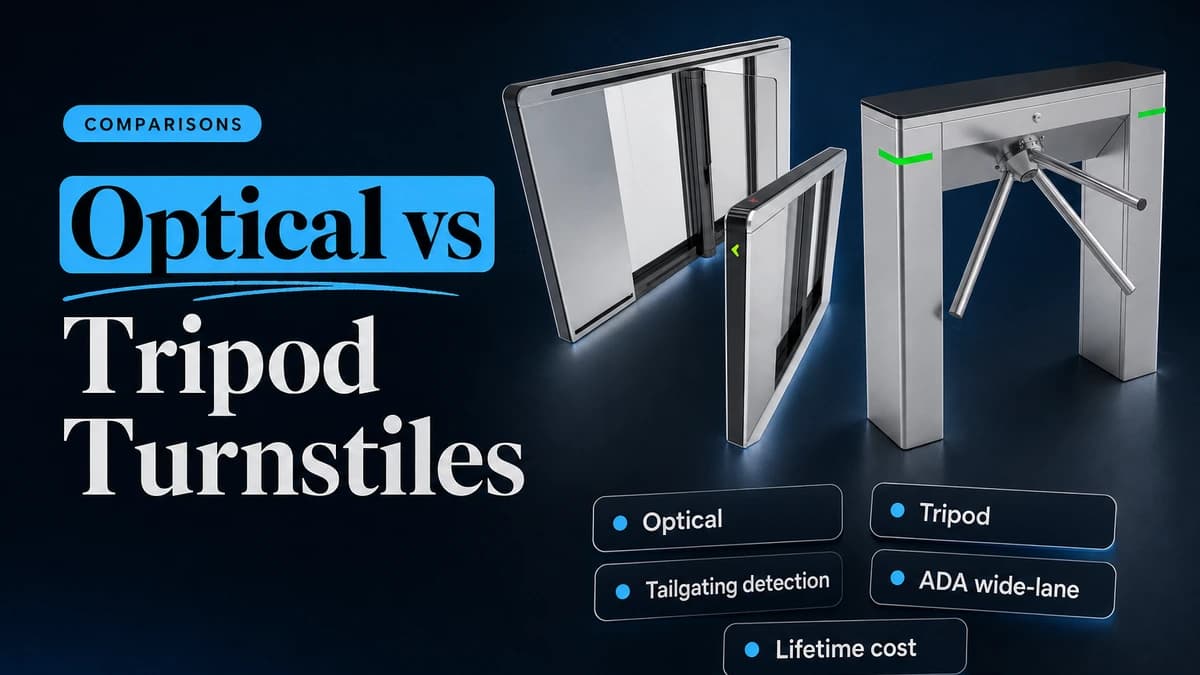
Optical Turnstile vs Tripod Turnstile: Which Belongs in Your Lobby
An 8-dimension head-to-head: optical speed gates vs tripod turnstiles. Tailgating, ADA, integrations (Lenel, Genetec, Honeywell), MTBF, and lifetime cost.
Gatestile Engineering Team
May 2, 2026
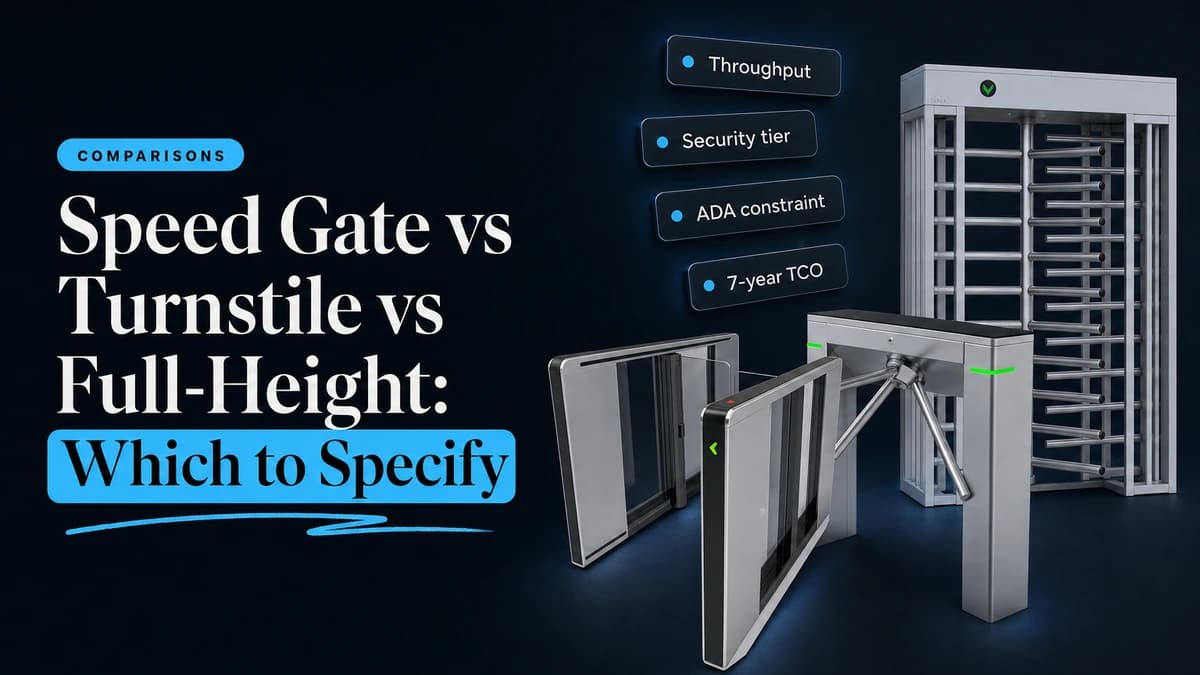
Speed Gate vs Turnstile vs Full-Height: A US Specifier's Guide (2026)
The 2026 specifier's guide to speed gates vs tripod vs full-height turnstiles. Throughput, security tier, ADA and NFPA, vertical fit, and 7-year TCO.
Gatestile Engineering Team
Apr 29, 2026
 New
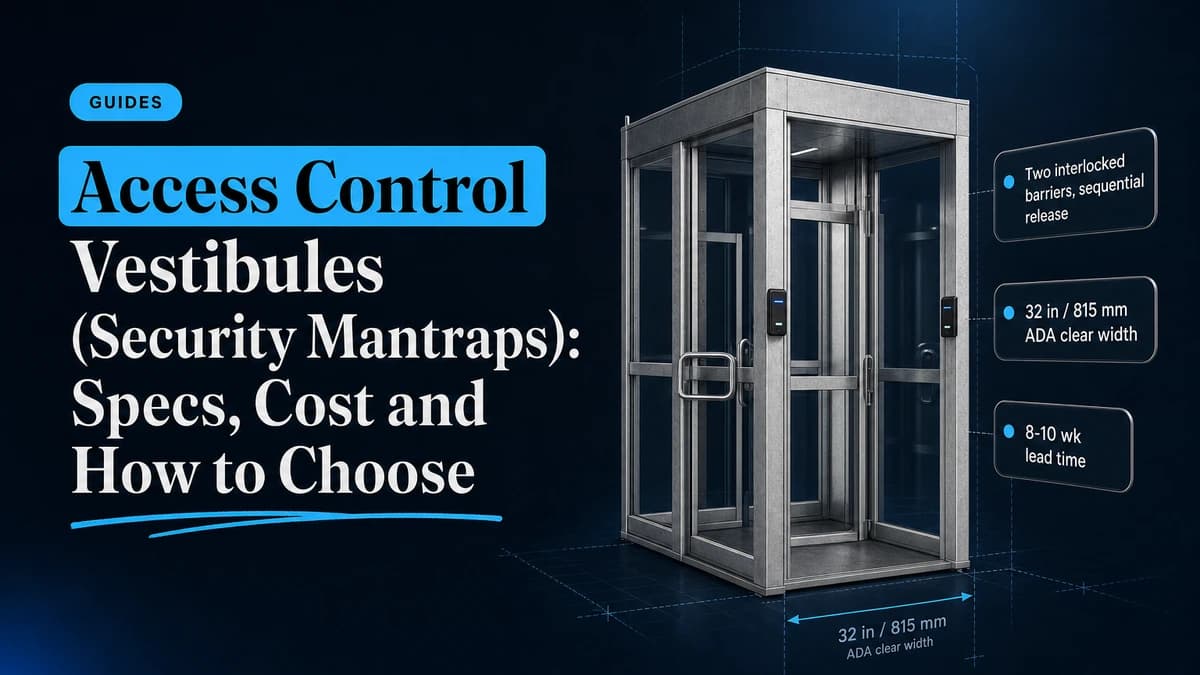
NewAccess Control Vestibules (Security Mantraps): Specs, Cost and How to Choose
What an access control vestibule is, how mantrap interlocks work, ADA and NFPA egress rules, real hardware options, and lead times to choose one.
Gatestile Engineering Team
Jul 24, 2026