

Guides
Access Control Vestibules (Security Mantraps): Specs, Cost and How to Choose
What an access control vestibule is, how mantrap interlocks work, ADA and NFPA egress rules, real hardware options, and lead times to choose one.

Gatestile Engineering Team
Engineering & Specifications, Gatestile
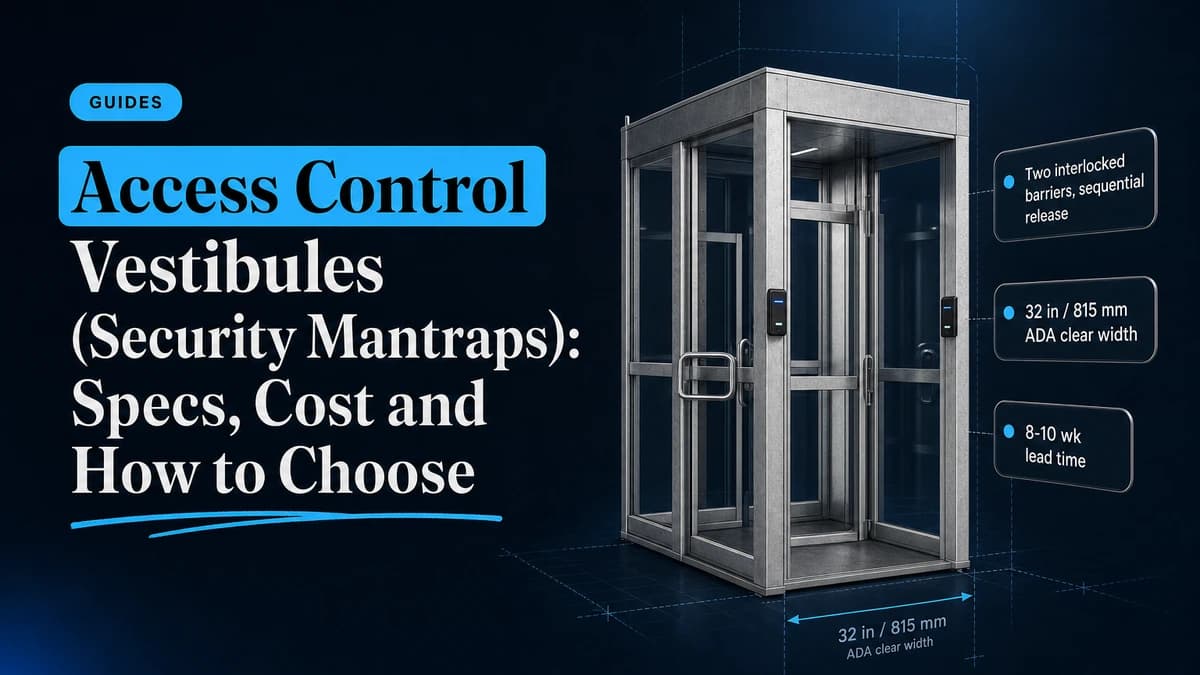
This guide is a specifier reference, not a sales pitch for one hardware type. A vestibule is a control pattern first and a piece of hardware second: you can build one from two doors you already have, or buy it factory-native in an enclosure designed for the job. Which path fits depends on throughput, budget, and how much physical containment the risk actually calls for.
What an access control vestibule is
An access control vestibule is a physical-security control comprising a small enclosed space between two sets of interlocking doors or barriers, where the first must close and lock before the second will open. The mechanism, not the label, defines it: sequential release plus single-person verification in the space between the two barriers. Security teams call the same thing a mantrap far more often than they use the formal term; both names describe the identical control.
The interlock logic is straightforward. The outer barrier locks the moment it closes. The inner barrier will not release until the control system confirms exactly one verified person is in the containment space. Systems built for this application add weight sensors and occupancy detection between the doors to catch a case where a second body entered on one credential before the outer door fully closed. That verification step, not the enclosure shape, is what makes a vestibule a security control instead of just two doors in a row.
Vestibule vs mantrap: same control, two names
There is no functional difference between a mantrap and an access control vestibule. "Mantrap" is the term security integrators and facility teams use day to day; "access control vestibule" is the more formal phrasing that shows up in physical-security control documentation and specification language. Neither name changes the requirement: two interlocked barriers, sequential release, one verified person at a time in the space between them.
| Approach | What it is | Best fit | Trade-off |
|---|---|---|---|
| Door-based vestibule | Two standard access-controlled doors with interlock control logic added between them | Retrofits, existing door openings, budget-constrained projects | Doors and frames are a separate line item; interlock logic and sensors are the vendor's real scope |
| Purpose-built enclosure (glass rotating turnstile) | A factory-native rotating drum with mantrap logic built in from the start | New construction, architectural lobbies, higher-security zones | Longer lead time and higher cost than adding logic to existing doors |
Our glass rotating turnstiles are built around mantrap logic natively: a fully enclosed rotating drum with 10mm tempered safety glass panels and interlocking door sequences, so the next person cannot enter until the current occupant has fully exited. For a facility that prefers a door-based vestibule instead of a rotating enclosure, the same interlock principle applies to a pair of standard access-controlled doors, with the turnstile-control vendor supplying the interlock logic and sensors rather than the doors themselves.
Where vestibules get specified
| Setting | What the vestibule controls | Typical driver |
|---|---|---|
| Data center white space / cage entry | Who enters the raised floor or a specific tenant cage | SOC 2, PCI-DSS, and internal physical-access audit programs |
| Bank vaults and cash-handling rooms | Single-person entry to cash or valuables storage | Loss prevention and insurance underwriting requirements |
| Jewelry and high-value retail | Controlled entry to display or storage areas | Loss prevention, similar logic to cash-handling rooms |
| Government and high-security facilities | Access to classified or sensitive-compartmented areas | Agency physical-security policy and facility security level |
Our data center turnstiles guide covers the data center case in more depth, including how a mantrap fits alongside perimeter full-height turnstiles and lobby speed gates in a layered entry design; that guide is the deeper read if data center or colocation is your specific vertical.
The three types of access control, and where a vestibule fits
Access control breaks into three categories, and a vestibule is one control within the first: physical access control (barriers like turnstiles, mantraps, and locked doors that govern who enters a space), logical access control (credentials, passwords, and system permissions that govern who accesses data and applications), and administrative access control (the policies and procedures, such as visitor escorting and badge-issuance rules, that govern how the first two are actually used day to day). An access control vestibule is a physical control. It is only as strong as the logical control behind it, since the interlock logic is checking a badge, PIN, or biometric read at each door, and only as consistent as the administrative policy that says who gets issued a credential for that door in the first place.
ADA, egress, and the compliance checklist
A vestibule is not exempt from the same accessibility and life-safety rules that apply to any other entrance control. Two things to confirm before you specify one:
- Egress. Per NFPA 101, both barriers must fail safe on a fire-alarm signal or power loss, releasing to free passage in the egress direction. This is a mandatory interlock, not an optional feature, on any vestibule that sits on a means-of-egress path.
- Accessible route. If the vestibule sits on an accessible route, the 2010 ADA Standards require at least one accessible passage with 32 inches (815 mm) of minimum clear width, along with adequate operating force and dwell time for a slower or assisted passage. Our ADA compliance guide for entrance control covers the width, force, and timing rules in full, including the two compliant patterns (wide-lane hardware, or a companion accessible gate) that apply to vestibules the same way they apply to turnstile lanes.
Integration: the interlock is a logic layer, not a new access control system
A vestibule does not replace your access control system; it adds an interlock rule on top of it. The reader hardware, credential type, and head-end panel are the same choices you would make for any other entrance. For the wiring, protocol, and head-end compatibility detail (OSDP vs Wiegand, fire-alarm release wiring, and which platforms are natively supported), see the turnstile access control integration guide. The short version: if your access control panel can read a credential and release a door, it can drive a vestibule interlock, since the interlock logic sits at the lane or door controller, not inside the head-end software.
Cost and lead time
| Build approach | Typical lead time | What drives cost |
|---|---|---|
| Door-based vestibule | Depends on the doors and interlock controller; doors are typically an existing or separately sourced line item | Interlock logic, sensors, and control wiring, not the doors themselves |
| Glass rotating turnstile (purpose-built) | 8-10 weeks standard configurations | Glass finish, biometric integration, frame finish |
| Glass rotating turnstile, custom configuration | 12-14 weeks | Custom glass tints, etching, or non-standard frame finishes |
The site-wide lead-time range across Gatestile's product lines is 3-8 weeks; the mantrap-capable glass rotating line runs longer than that range because of its enclosure fabrication and interlock-logic testing. If you are budgeting a project with a hard occupancy date, order the vestibule hardware as soon as the door schedule and floor plan are locked, since entrance control is commonly ordered late and installed early relative to other trades.
How to choose
Frequently asked questions
- An access control vestibule is a small enclosed space between two sets of interlocking doors or barriers, built so the first door must fully close before the second will open. Only one verified person is ever inside the space at a time. It is the physical-security control most facilities call a mantrap, used at server rooms, cash-handling areas, and other single-person-verification choke points.
Keep reading
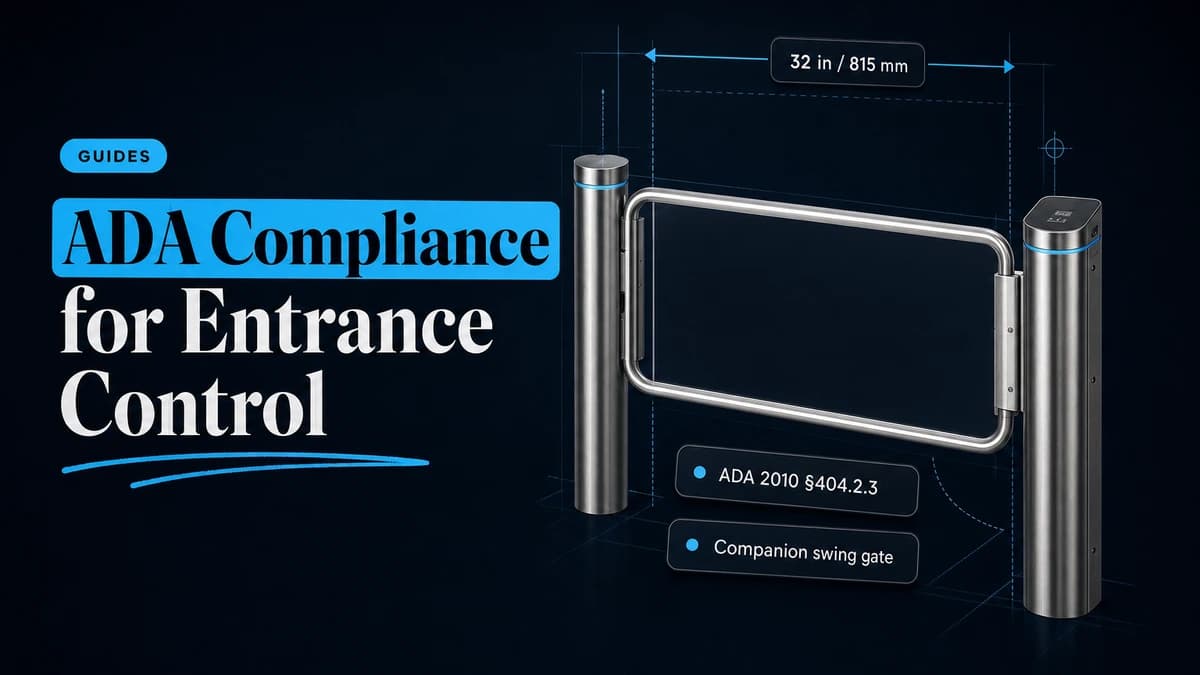
ADA Compliance for Entrance Control: A Specifier's Guide
How to keep a turnstile or speed gate install ADA compliant: the 32-inch rule, companion swing-gate lanes, force and timing, egress, and inspection failures.
Gatestile Engineering Team
May 29, 2026
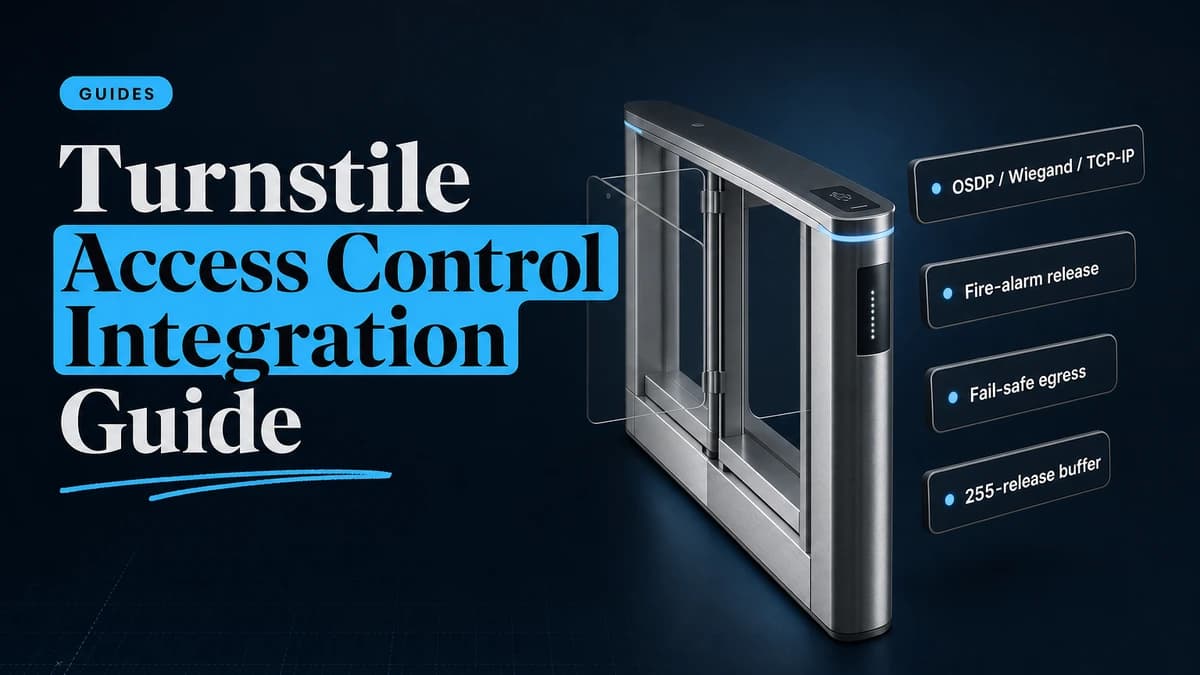
The Turnstile Access Control Integration Guide (2026)
How turnstiles and speed gates wire into HID, LenelS2, Genetec, and Honeywell: protocols, reader packages, REX, fire-alarm release, and anti-passback.
Gatestile Engineering Team
May 29, 2026
 New
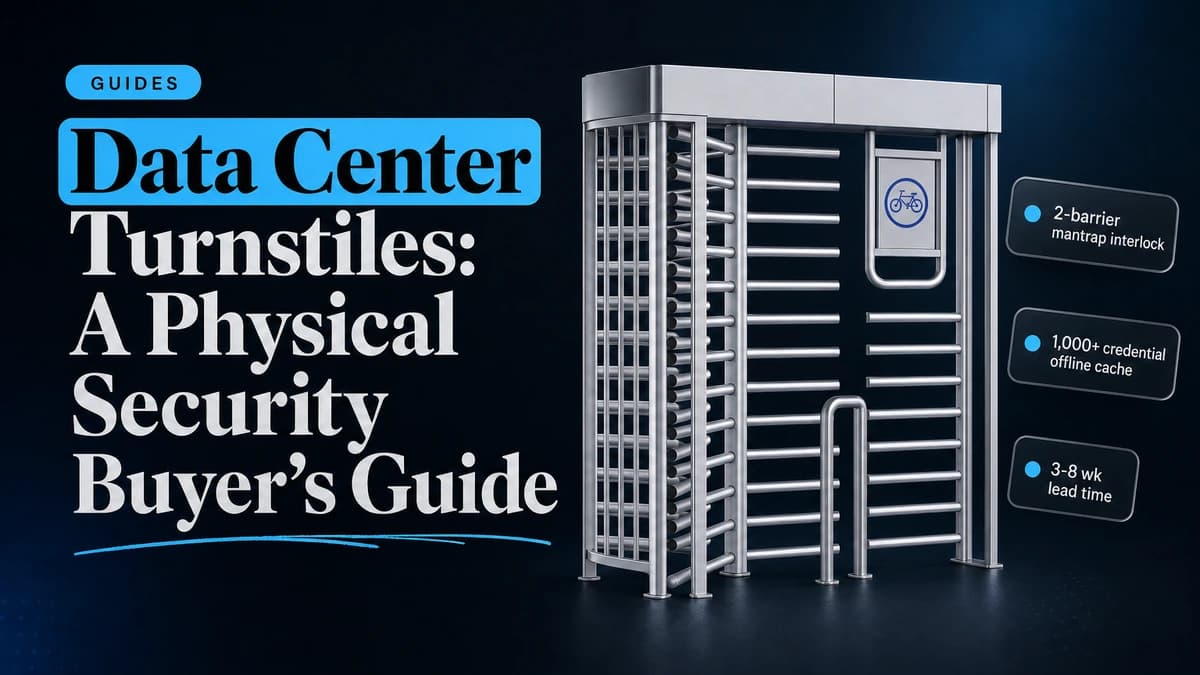
NewData Center Turnstiles: A Physical Security Buyer's Guide
How data center facility managers spec turnstiles for mantrap entries, tailgating prevention, and colocation vs enterprise access control needs.
Gatestile Engineering Team
Jul 23, 2026