

Guides
Turnstile Installation & Site-Prep Checklist (2026)
What to prepare before turnstiles arrive: power, conduit, flooring, structural blocking, surface vs embedded mounting, and lead-time sequencing for a smooth install.

Gatestile Engineering Team
Engineering & Specifications, Gatestile
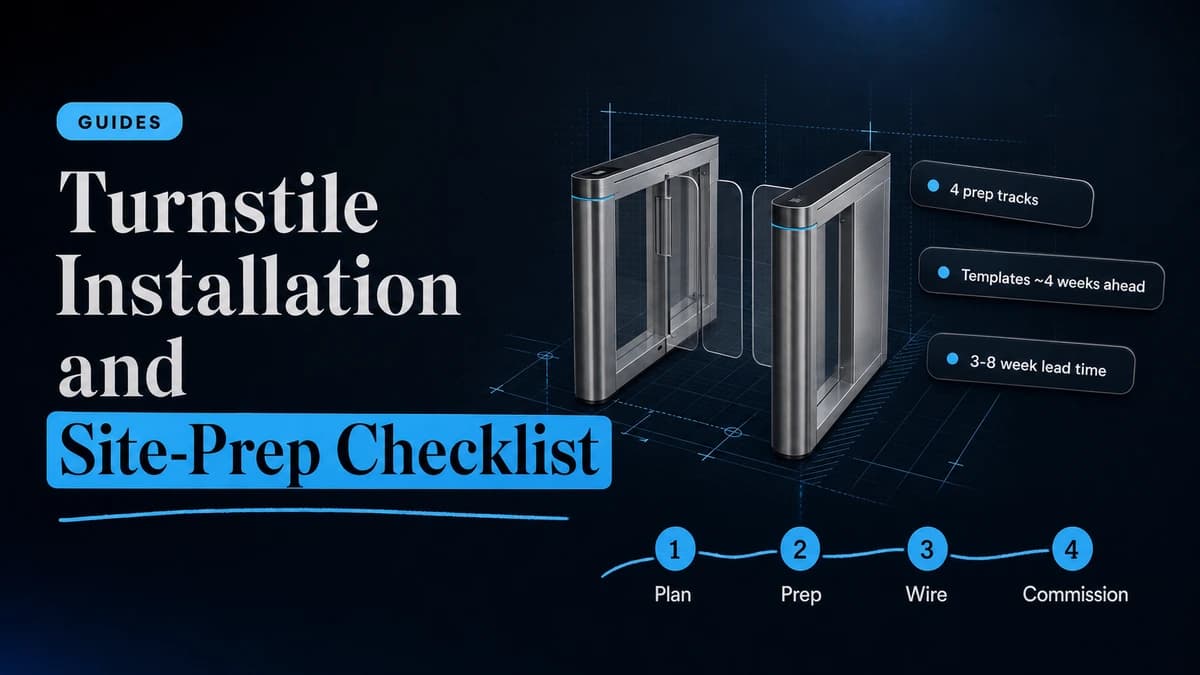
Sequence first: the timeline that prevents delays
The order of operations matters more than any single step. The hardware lead time and the site-prep work happen in parallel, and prep must finish first. If you're still finalizing a manufacturer, confirm the lead time and warranty terms in writing before this sequence starts; our Alvarado alternatives comparison shows how published lead time can vary by manufacturer.
| Stage | What happens | Owner |
|---|---|---|
| Order + survey | Confirm config, finishes, integration; site survey | You + Gatestile |
| ~4 weeks before delivery | Site templates + electrical requirements issued | Gatestile → GC |
| Site-prep window | Power, conduit, flooring, blocking, network rough-in | General contractor |
| A few days before delivery | Prep complete and verified against template | GC + you |
| Install + commission | Set lanes, wire, integrate ACS, test interlocks | Installer + integrator |
Track 1: Electrical
Each lane needs a dedicated power feed terminated at the cabinet location and low-voltage conduit for reader and access-control cabling. The site template gives the exact voltage, circuit, and conduit layout per model. Have the electrician rough-in power and pull strings in the conduit before delivery so install day is terminate-and-test. Circuit sizing and rough-in follow NFPA 70, the National Electrical Code.
Track 2: Structural and flooring
The cabinets bolt to the floor and must not flex under traffic. That means structural blocking under every mounting point and a level, finished surface at the lane locations.
| Surface mount | Embedded mount | |
|---|---|---|
| Best for | Retrofits, fast installs, future relocation | New builds, premium lobbies, high traffic |
| Method | Anchored to finished floor | Anchor points set into slab during construction |
| Look | Cabinet base visible | Flush, integrated |
| Rigidity | Good | Maximum |
| Floor work | Block + level finished floor | Coordinate with slab pour / core |
For surface mounting, confirm the finished floor is level and that there is structural blocking (not just tile over a void) under each anchor. For embedded mounting, coordinate the anchor layout with the slab pour or coring well ahead of time, since it cannot be done after the floor is finished.
Track 3: Network
If any lane is network-attached (TCP/IP integration, cloud-managed access control, or remote monitoring), provision a switch port and the appropriate VLAN at each lane location and run the data drop with the low-voltage rough-in. Confirm IP addressing and VLAN with the customer's IT team before install.
Track 4: Access control and safety
Coordinate the integrator and the fire-alarm interlocks before install day:
- Confirm the access control head-end, wire protocol (OSDP preferred), and reader package.
- Identify the request-to-exit method for the egress direction.
- Wire a dry contact from the fire-alarm panel for barrier release, and verify fail-safe egress on power loss.
- Schedule AHJ sign-off on the egress and fire behavior per IBC Chapter 10 and local amendments.
See the access control integration guide for the protocol and head-end detail, and the ADA guide for accessible-lane requirements.
The day-of-delivery checklist
Frequently asked questions
- Once the site is prepared, a typical lane bank is installed and commissioned in one to a few days depending on lane count and integration complexity. The bigger variable is site prep (power, conduit, flooring, and structural blocking), which the general contractor handles before the hardware arrives. We provide site templates and electrical requirements roughly 4 weeks ahead so prep finishes before delivery.
Keep reading
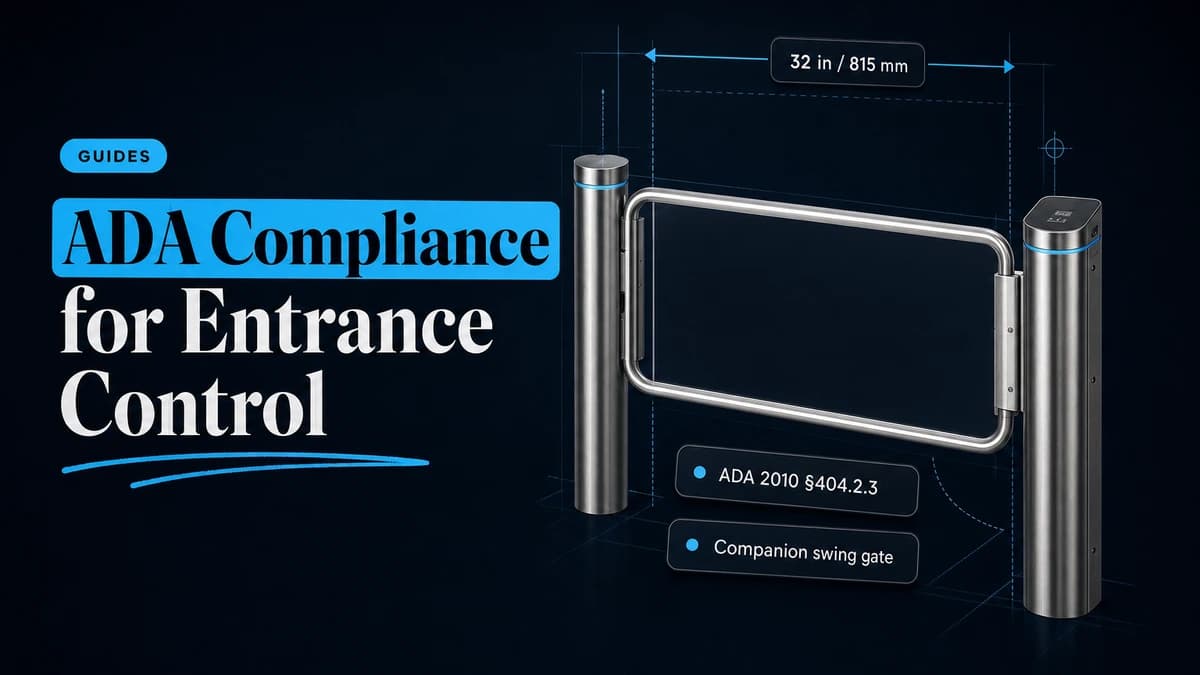
ADA Compliance for Entrance Control: A Specifier's Guide
How to keep a turnstile or speed gate install ADA compliant: the 32-inch rule, companion swing-gate lanes, force and timing, egress, and inspection failures.
Gatestile Engineering Team
May 29, 2026
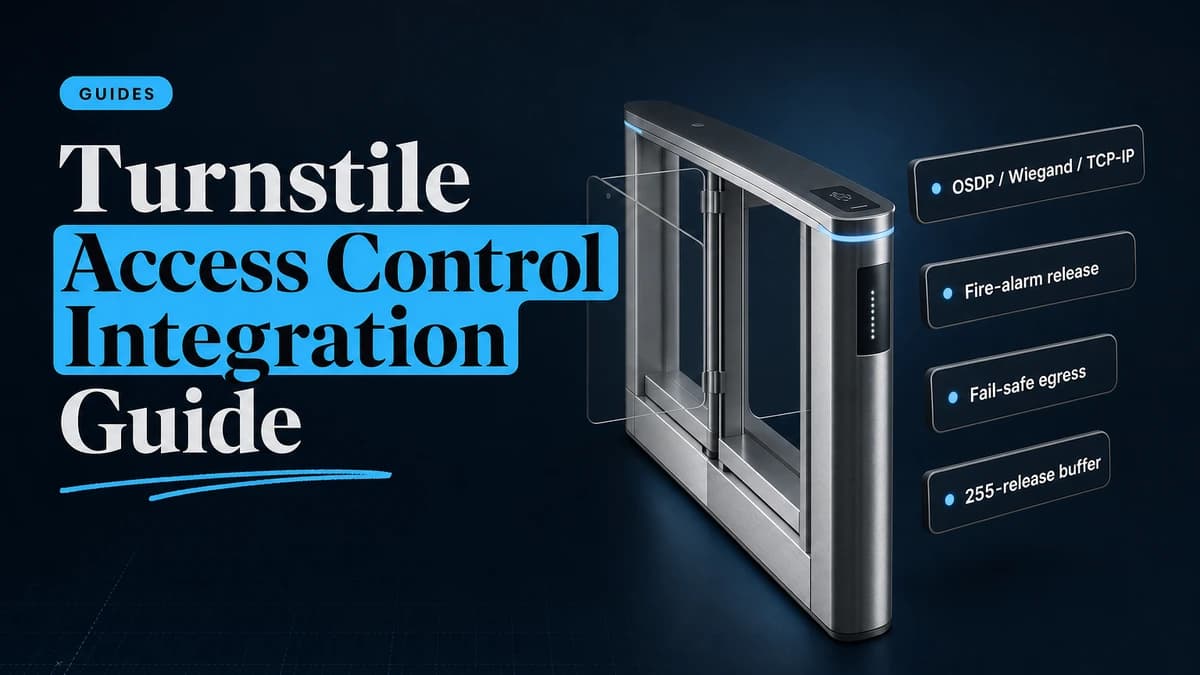
The Turnstile Access Control Integration Guide (2026)
How turnstiles and speed gates wire into HID, LenelS2, Genetec, and Honeywell: protocols, reader packages, REX, fire-alarm release, and anti-passback.
Gatestile Engineering Team
May 29, 2026
 New
NewAlvarado Turnstile Alternatives: Comparable US Options (2026)
Alvarado turnstile alternatives compared by category with published specs, warranty terms, real lead times, and Alvarado's dormakaba Group ownership explained.
Gatestile Engineering Team
Aug 3, 2026