

Guides
Metro and Transit Access Control: Fare Gates and Turnstiles
A buyer's guide to metro access control: how fare-gate turnstiles work, throughput, fare-system integration, ADA lanes, weatherproofing, and choosing.

Gatestile Engineering Team
Engineering & Specifications, Gatestile
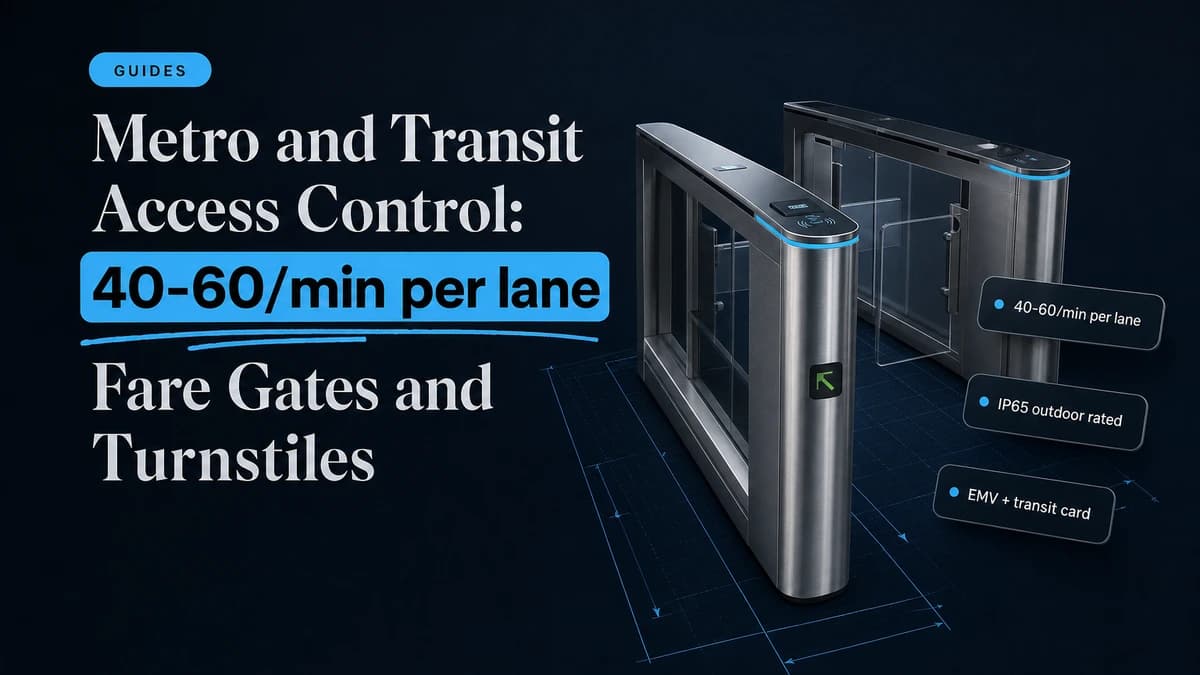
A metro station entrance is really two decisions stacked on top of each other: which fare-gate hardware clears your peak-minute passenger volume, and which fare and payment systems it has to talk to on day one. Get the throughput math wrong and you build platform crowding at rush hour. Get the integration wrong and you are retrofitting readers a year after installation. This guide walks both, plus the ADA and weatherproofing requirements that apply to nearly every station and parking deployment.
If you already know you need fare-gate turnstiles and want the product fit, our tripod turnstile line is the workhorse for station and parking entries; the full-height turnstile buyer's guide covers the maximum-security option for unstaffed perimeters. For a look at how a whole transit or parking program comes together, see the transit and parking solutions page.
What metro access control actually is
Metro access control is the fare-gate and turnstile hardware that sits at a station entrance, platform choke point, or parking exit and does three jobs at once: validate that a rider or vehicle has paid, enforce single-passage per fare, and keep a peak-hour crowd moving without a backup on the platform. The same hardware class covers subway and metro stations, bus rapid transit stops, commuter rail platforms, parking garages, airport parking, and ferry terminals. It is unstaffed by design; the gate itself is doing the verification a fare inspector used to do by eye.
The three hardware classes that show up in transit deployments each answer a different part of that job:
| Hardware class | Best for | Key strength | Trade-off |
|---|---|---|---|
| Tripod turnstiles | Station entries, bus terminals, parking entries | Cost-effective, durable, weather-resistant waist-high fare gate | Waist-high arm relies on social pressure, not a hard barrier |
| Full-height turnstiles | Unstaffed fare-paid-zone perimeters | Maximum evasion prevention; physically blocks climb-over and crawl-under | Slower single-lane throughput; imposing at a passenger-facing entrance |
| Swing gates (ADA) | Wide-lane access for wheelchairs, strollers, luggage | ADA-width passage on the same fare validation as standard lanes | Lower per-lane throughput than an optical or tripod lane; pairs with, not replaces, the main fare-gate array |
Most stations run all three in the same entrance bank: tripod turnstiles across the majority of lanes for cost-effective fare gating, a full-height turnstile at any unstaffed fare-paid-zone perimeter where evasion risk is highest, and at least one swing gate lane for ADA-compliant wide access. The mental model: pick the mix by which risk and which passenger each lane has to serve, not by defaulting to one hardware class for the whole entrance.
How fare-gate turnstiles work
A fare-gate turnstile reads a credential (an EMV tap, a transit card, a mobile ticket, or a magnetic stripe swipe), validates it against the fare system in real time, and releases the barrier for exactly one passage. The mechanism enforcing "one passage" is anti-tailgating and anti-passback logic working together: anti-tailgating sensors detect a second body attempting to follow through on one validated fare, and anti-passback logic blocks a second entry attempt on a credential that has not yet registered an exit. Together they are the mechanism that stops one tap being shared down a line of riders, and they report fare-evasion attempts in real time rather than surfacing them only in an end-of-day reconciliation report.
That single design point, validating and releasing per passage rather than per time window, is what separates a fare gate from a simple door with a card reader. A door reader confirms a credential was presented. A fare gate confirms the credential, meters exactly one body through on it, and logs the attempt if a second body tries to follow.
Throughput: sizing lanes to your real peak
The 40-60 per minute figure is a per-lane planning range, not a fixed number: fare-media mix moves you within it. A lane running mostly contactless EMV taps clears faster than one handling a heavier mix of mobile-ticketing lookups, since a mobile ticket validation can take a beat longer than a straight tap. When you size an entrance bank, work from the real peak-15-minute arrival count for your busiest platform or event day, then divide by the per-lane figure to get a lane count, not the other way around. A bank sized to the daily average will bottleneck every single rush hour.
Lane count math scales linearly off that per-lane number: a 10-lane entrance at the low end of the range (40/min per lane) clears 24,000 passengers per hour; at the high end (60/min per lane) it clears 36,000. The 25,000+ figure sits comfortably inside that band and is the realistic planning number for a mixed-media 10-lane bank at peak commute.
Fare and payment system integration
Fare gates have to speak whatever payment and fare-media protocols your agency already runs, plus whatever it is migrating to. The integration surface breaks into three layers:
| Layer | What it covers | Notes |
|---|---|---|
| Contactless EMV | Visa, Mastercard, Amex, Apple Pay, Google Pay via partner readers (Cubic, ACS, and others) | Open-loop adoption typically reduces cash handling by 60-80% |
| Transit cards and mobile ticketing | Closed-loop transit cards, mobile ticketing apps, legacy magnetic stripe | Both open-loop and closed-loop payment models are supported side by side |
| Parking systems | Ticket dispensers, pay stations, license-plate recognition, monthly permit systems | Integrates with parking-management platforms (TIBA, Amano, FlashParking, ParkMobile, SpotHero) via REST API |
The parking side of a transit or garage deployment validates permits and payments the same way the fare side validates a rider's tap: in real time, against the provider's database, before the gate releases. A monthly permit holder's plate is checked against the parking operator's records at the moment of arrival, not on a delayed batch, which is the same real-time-validation-before-release pattern the fare-gate side runs on rider credentials.
ADA accessibility at fare gates
Meeting the clear-width minimum is necessary but not sufficient. Wide ADA lanes at a fare gate run extended dwell times so a wheelchair user, a rider with a mobility device, or someone traveling with a stroller or luggage is not rushed by a barrier timed for a walking passenger. They add audible and visual cues for riders with visual impairments, and the gate or swing arm moves at a slower rotation or swing rate on that lane specifically.
The detail that matters most for a specifier: the ADA lane validates the exact same fare credential as the standard lanes beside it. A rider is not routed to a different payment process, a staffed window, or a separate ticket type because they used the wide lane; the fare logic is identical, only the passage geometry and timing differ. That is what keeps an ADA lane from becoming a second-class entry path in practice, not just on paper.
Weatherproofing for platforms and parking structures
Transit platforms and parking structures are frequently open to weather in a way an office lobby never is, and that changes the enclosure spec you need. IP65-rated outdoor turnstile options exist specifically for exposed transit platforms and parking structures.
Stainless steel (AISI 304) construction is the material spec that goes with an outdoor IP65 enclosure: it handles rain, snow, temperature extremes, and UV exposure without the corrosion an indoor-grade finish would show within a season or two outdoors. If your station design has any lane exposed to weather (an open-air platform entrance, an unsheltered parking-structure gate line), specify the outdoor-rated enclosure and stainless finish for that lane at the outset. Retrofitting weatherproofing onto an indoor-spec unit after a season of corrosion is a harder and more expensive fix than specifying it correctly the first time.
How to choose: a short decision order
Work the list in that order. Throughput sets your lane count; payment integration confirms the electronics package each lane needs; the security tier (full-height vs tripod) sets which lanes get the strongest barrier; ADA sets your minimum wide-lane count; weatherproofing sets the enclosure spec for exposed lanes. Specifying out of order (picking hardware finish before lane count, for example) is the most common way a transit fare-gate order comes back under-provisioned for actual rush-hour demand.
Warranty coverage on Gatestile transit and parking hardware runs 5 years, and standard lead time across our lines is 3-8 weeks from our US assembly facility. For the deeper cost math across hardware classes, the commercial turnstile cost guide breaks down price bands by product line, and the turnstile access control integration guide covers how these lanes wire into your access-control or fare-system head-end.
Frequently asked questions
- Metro access control turnstiles integrate with contactless EMV payment (Visa, Mastercard, Amex, Apple Pay, Google Pay), transit fare cards, mobile ticketing apps, and legacy magnetic stripe systems through partner readers from vendors like Cubic and ACS. Both open-loop and closed-loop payment models are supported, with real-time fare validation at the gate rather than a batch check after the fact.
Keep reading
 New
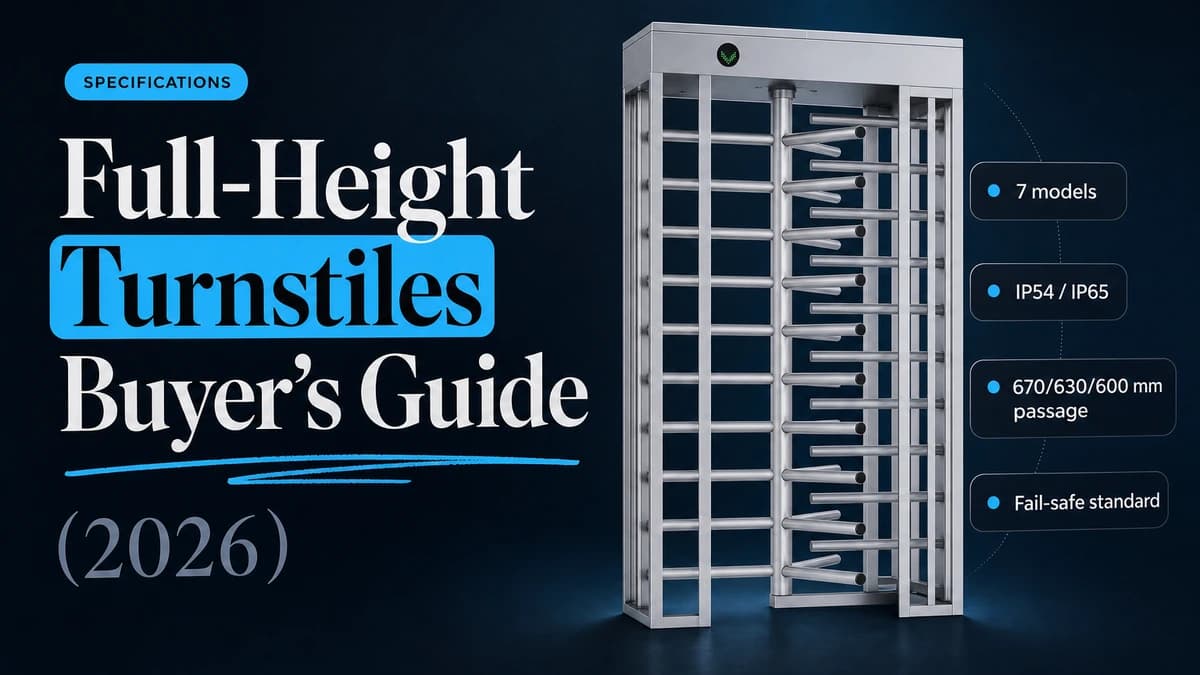
NewFull-Height Turnstile Buyer's Guide (2026)
A specifier's guide to full-height turnstiles: Gatestile's seven models, shared platform specs, ADA companion-lane rules, egress, site prep, and lead times.
Gatestile Engineering Team
Jul 18, 2026
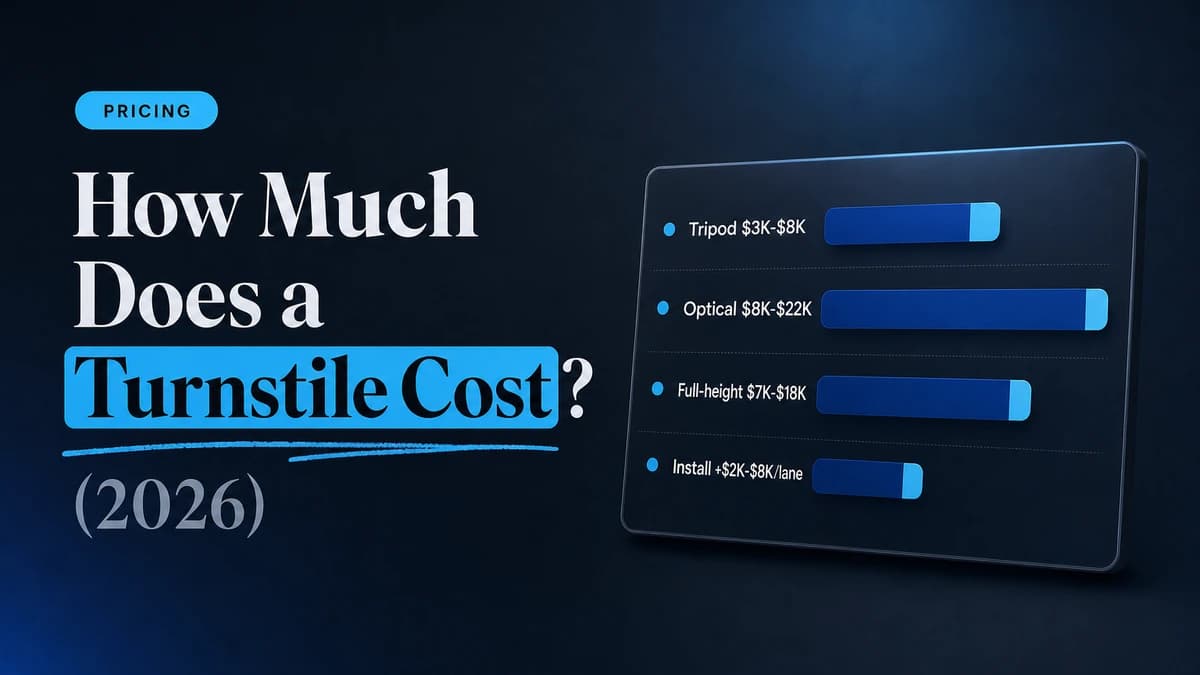
How Much Does a Commercial Turnstile Cost in the US? (2026 Real Price Bands + Installed-Cost Breakdown)
A 2026 cost guide for commercial turnstiles in the US. Real hardware bands, transparent installed-cost line items, lead times, and 5-year TCO. No fluff.
Gatestile Engineering Team
May 6, 2026
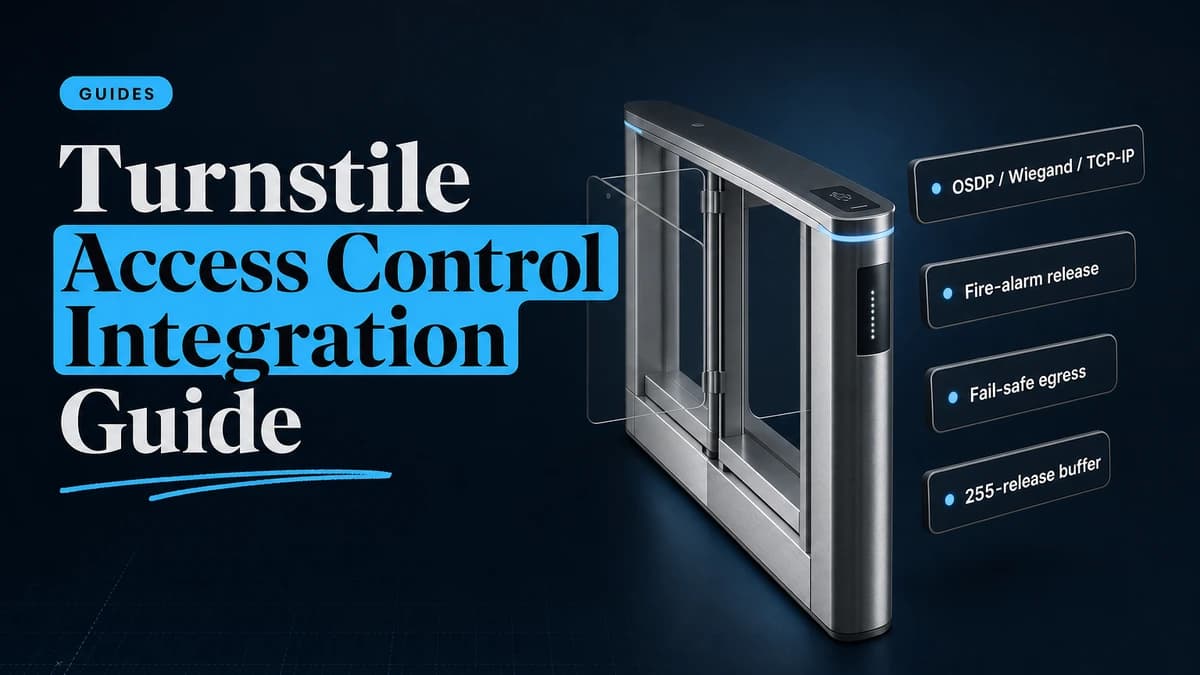
The Turnstile Access Control Integration Guide (2026)
How turnstiles and speed gates wire into HID, LenelS2, Genetec, and Honeywell: protocols, reader packages, REX, fire-alarm release, and anti-passback.
Gatestile Engineering Team
May 29, 2026